
Holy Bible Daily Prayer
GoFish AppsBooks & Reference
4.31.60K Reviews
- Version
- 2.0.0
- Installs
- 1.00M
- Age Rating
- Everyone
Screenshots
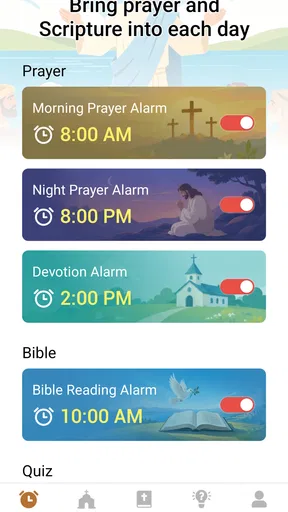
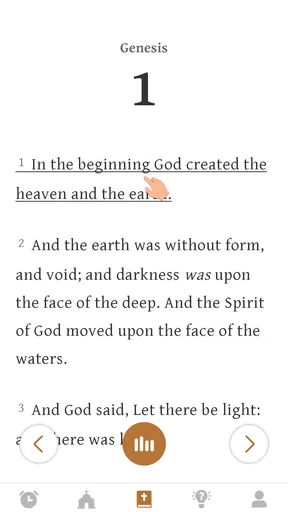
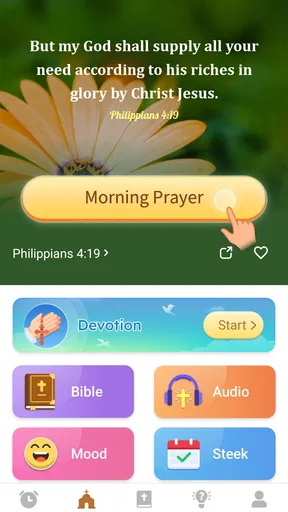
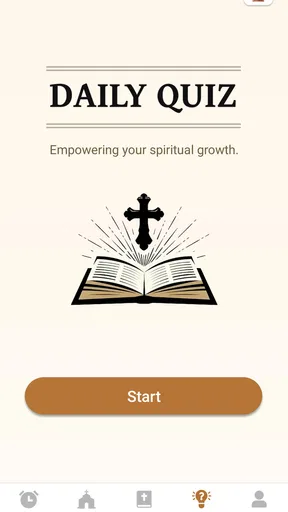
Our Review of Holy Bible Daily Prayer
 Analysis by Appyee
I approached Holy Bible Daily Prayer as a practical reading companion rather than as a replacement for a printed Bible, a study group, or personal prayer. Its central appeal is simple: it puts Bible reading and daily spiritual reflection into one phone-based experience. That focus matters because many people do not struggle to find religious material; they struggle to make a quiet, repeatable moment for it.
In my experience, the app works best when I treat it as a small pause in the day. I can open it during a calm morning, read for a few minutes, and use the passage as a starting point for prayer or reflection. It is not trying to be a broad digital library in the way some reference apps are. Its identity is much more direct, and that makes it easier to understand whether it belongs in my routine.
How the daily prayer focus changes the experience
The important capability here is the combination of a Holy Bible reading experience with a spiritual companion approach. That sounds modest, but it changes how I use the app. Instead of opening the phone with the vague intention of “reading something later,” I can make the app part of a defined habit: open it, read, pause, and carry one thought into the rest of the day.
That structure is particularly useful for someone who wants a gentle prompt rather than an academic study tool. I do not need to prepare a reading plan in advance or decide which book to search through before I begin. The app’s purpose points me toward devotional use, so the mental effort required to start is lower than it is with a large reference application filled with unrelated tools.
I also like the fact that the experience is available in an app categorized under Books & Reference. That places it somewhere between a traditional reading app and a personal spiritual aid. I would not choose it expecting the deep cross-referencing, language tools, or scholarly notes that specialist Bible-study products may provide. I would choose it when the priority is keeping Scripture close and making daily prayer feel more approachable.
For a newcomer, this distinction is important. The app can support a personal routine, but it does not automatically create spiritual discipline. A notification, shortcut, or convenient reading screen can remind me to begin; the quality of the habit still depends on whether I slow down and engage with what I am reading. I found the value strongest when I used the phone as a doorway into reflection, not as something to scroll through quickly.
A realistic morning routine
Imagine a weekday morning when I have only a short window before work. I can open the app while drinking coffee, read the available Bible material, and choose one sentence or idea to revisit later. I do not need to turn that moment into a lengthy study session. Even a brief reading can become useful if I ask myself what it says, how it relates to my current concerns, and what kind of prayer naturally follows from it.
This is one of the less obvious strengths of a focused app: it reduces the number of decisions at the beginning. With a general Bible application, I may spend time choosing a translation, browsing categories, comparing plans, or searching for a passage. Those options can be valuable, but they can also become a form of avoidance. A more concentrated daily companion is better when I want to begin before my attention is pulled elsewhere.
There is also a practical benefit for people who move between locations. A phone is easier to keep nearby than a larger reference book, especially during a commute break, lunch pause, or evening wind-down. I would still be mindful of the setting; reading in a noisy environment can make the experience feel rushed. The app is most effective when I give it even a small amount of uninterrupted attention.
Using it without turning prayer into a checklist
My best advice is not to measure success by how quickly I finish a passage. I would open the app with a simple three-step approach: read slowly, identify one meaningful point, and respond in my own words. That response might be gratitude, a request for help, or quiet consideration. The app provides the starting material, but the personal response is what keeps the routine from becoming another item to mark off.
A useful variation is to read at different times for different purposes. In the morning, I might use the passage to set an intention for the day. At night, I might return to the same thought and consider whether it changed how I acted. This does not require complicated tracking features. It is simply a way to get more value from the app’s central capability instead of treating it as a one-minute content feed.
Another practical tip is to keep a separate note, either on paper or in a device already familiar to me, for passages or questions I want to remember. A focused Bible companion can make reading convenient, but convenience is not the same as long-term organization. If I am studying a theme over several weeks, an external notebook may be more useful than relying on memory alone.
Where it fits among Bible and reference apps
The usual alternatives fall into several groups. A printed Bible offers a slower, more tactile experience and does not compete with phone notifications. A full-featured Bible app may provide broader search and study functions. A general prayer app may concentrate more on guided reflections than on Bible reading. Holy Bible Daily Prayer sits closer to the middle: it is a portable spiritual reading tool with a clear Bible-centered purpose.
That middle position is both its appeal and its limitation. I prefer it to a paper book when I need something immediately available, especially outside home. I may prefer a printed Bible when I want to read without the distractions of a screen. I may prefer a more advanced study app when I need detailed comparisons, historical context, or research-oriented navigation. Choosing this app depends on whether daily accessibility matters more than depth of reference tools.
The app is free, which removes the most obvious barrier to trying it. That makes it reasonable for someone who is exploring a digital prayer routine without wanting to commit money first. Free access does not mean every person will find the format suitable, though. Someone who dislikes reading on a phone, avoids digital devotionals, or wants extensive customization may feel more comfortable with another option.
Its broad reach suggests that this straightforward approach resonates with many users: the app has passed one million installs, carries an average rating of 4.3 from around eleven thousand ratings, and has roughly one thousand six hundred written reviews. I see those figures as signs of an established audience, not as proof that it will match every reader’s expectations. Ratings are useful context, but my own reading preferences remain more important than popularity.
What I would check before making it a main study tool
I would first decide what I actually need from a Bible app. If my goal is a short daily reading and a prayerful pause, this app is a sensible candidate. If I need a research workspace, I would compare it with a dedicated study product before moving my whole routine. That simple decision prevents disappointment caused by expecting one app to cover every possible religious reading task.
I would also pay attention to how naturally the app fits my schedule. A spiritual companion is only helpful if I can return to it without friction. I would try it during the time of day when I am most likely to be calm and consistent, rather than forcing it into a busy period simply because that sounds ideal. For me, a modest routine that I actually maintain is more valuable than an ambitious plan that lasts only a few days.
Tradeoffs that become clear in everyday use
The first tradeoff is focus versus breadth. A focused experience can make starting easier, but it may feel limited to readers who want a large set of study tools in the same place. I consider that a deliberate boundary rather than an automatic flaw. The app is easier to recommend as a daily companion than as a complete theological reference system.
The second tradeoff is convenience versus attention. Having Scripture on a phone means I can read almost anywhere, but the same device may contain messages, social networks, and other interruptions. I get better results when I silence distractions or place the phone in a quieter setting. The app cannot create concentration on its own, so the surrounding phone habits matter more than they would with a physical book.
The third tradeoff concerns personal interpretation. A short devotional rhythm can encourage reflection, but readers who want extensive context may need additional resources. I would avoid treating a brief reading as the final word on a difficult passage. For serious study, I would consult a trusted Bible, commentary, teacher, or community alongside the app. That approach lets the application serve its strongest role without asking it to do work it was not designed to replace.
There is also a difference between emotional comfort and spiritual usefulness. Some days I may want a reassuring moment; on other days I may need to wrestle with a challenging text. I would not judge the app only by whether every session feels immediately uplifting. Its value can also come from making me stop, think, and examine my response. A daily companion is most worthwhile when it supports honest reflection rather than only pleasant reading.
The current version is 2.0.0, and it runs on Android 8.0 or later. That makes it accessible to people using older supported Android devices, which is helpful if I do not have a recent phone. At the same time, device compatibility is only one part of the decision. I would still install it on the phone I plan to use daily and see whether the reading flow feels comfortable on that screen and in my preferred routine.
Who may want a different option
I would skip this app if my main reason for installing a Bible application is detailed academic research. I would also look elsewhere if I want a purely offline, distraction-free experience and already have a printed Bible that I enjoy using. People who expect extensive personalization, advanced navigation, or a large suite of study aids should compare alternatives first rather than assuming a spiritual companion will provide all of them.
It may also be a poor fit for someone who wants prayer to remain completely separate from screen time. In that case, a paper journal, a local faith community, or a physical Bible may create a more meaningful boundary. I do not think digital convenience is automatically better; it is better only when it removes a real obstacle without introducing a larger distraction.
Who gains the most from this companion
I think the strongest audience is someone who already wants to read the Bible more consistently but has trouble getting started. The app’s focused identity can turn an unclear intention into a repeatable opening gesture. It is also well suited to people who travel between home, work, and other places and want a reference they can carry without adding another physical item.
It can be useful for a reader returning to faith after a long break, because a simple daily approach may feel less intimidating than a large study platform. I would recommend beginning with short sessions and allowing questions to arise naturally. There is no need to pretend that every passage will be immediately easy or that a routine must look the same every day.
The app may also suit households where different people want a personal reading moment without sharing one physical copy at the same time. Since it is rated for Everyone and offered free of charge, it is approachable for a wide range of users. Still, younger readers may benefit from discussing difficult passages with a trusted adult, while adults should choose resources that match their own tradition and interpretive needs.
GoFish Apps has positioned this product clearly as a Bible spiritual companion. I appreciate that clarity because it helps me set realistic expectations. I am not opening it for entertainment, social interaction, or a broad general-reference collection. I am opening it to read Scripture and create space for prayer, and the app makes sense when that is the task I want to accomplish.
My final recommendation after using it
I would recommend Holy Bible Daily Prayer to a friend who wants a free, accessible way to place Bible reading inside an ordinary day. Its real strength is not complexity; it is the reduction of friction between deciding to pray and actually beginning. That can make a meaningful difference for someone whose routine is inconsistent but whose intention is genuine.
I would describe it honestly as a daily companion rather than a complete replacement for every Bible resource. Use it for regular reading, quiet reflection, and a portable spiritual pause. Add a printed Bible, a notebook, or a more detailed study source when you need deeper context or a less distracting format.
For me, the best way to approach it is with a small, repeatable plan: choose one reliable time, read attentively, carry one idea forward, and return when the day allows. If that sounds like the kind of support I need, this app is worth trying. If I am searching for advanced research tools or a screen-free devotional practice, I would choose a different path instead.
Verdict
Strengths of Holy Bible Daily Prayer
- Daily prayers make it easy to build a consistent devotional routine.
- Simple navigation helps users find prayers and Bible passages quickly.
- Useful for quiet reflection, meditation, and personal spiritual growth.
- Prayer content can suit both short breaks and longer devotional sessions.
- A convenient option for keeping faith-based content available on the go.
Limitations of Holy Bible Daily Prayer
- Some prayers may feel repetitive for users seeking more variety.
- Content may not appeal to people from every Christian denomination.
- Reading on a small phone screen may be less comfortable for long sessions.
- Daily reminders can become intrusive if notification settings are limited.
- An internet connection may be needed for some features or content updates.
Similar Picks in This Category
View All
Google Play Books & Audiobooks
Google LLC4.7

네이버 - NAVER
NAVER Corp.3.5

Wattpad - Read & Write Stories
Wattpad.com3.7

King James Bible - Verse+Audio
Ozion4.8

Bible Offline-KJV Holy Bible
Bíblia Offline4.9

Amazon Kindle: Reading App
Amazon Mobile LLC4.8
Frequently Asked Questions
What is Holy Bible Daily Prayer, and what can I use it for?
Holy Bible Daily Prayer is a faith-based app designed to support daily Bible reading, prayer, and spiritual reflection. After exploring its main sections, I found it useful for users who want convenient access to Scripture, devotional inspiration, and prayer prompts in one place. It can become part of a morning routine, evening reflection, or personal quiet time, although it should complement—not replace—personal study and guidance from a church community.
Does Holy Bible Daily Prayer require an internet connection?
The app may require an internet connection for certain features, such as loading online Bible content, updating devotional material, displaying advertisements, or synchronizing user preferences. Basic content availability can depend on the version installed and the device being used. Before relying on it while traveling or in an area with limited service, users should open the app offline and check whether their preferred Bible passages and prayer resources remain accessible.
Is Holy Bible Daily Prayer free to download and use?
Holy Bible Daily Prayer can generally be downloaded without an upfront charge, but the exact experience may include advertising, optional purchases, or premium features depending on the platform and current release. I recommend checking the app-store listing before installing, especially for subscription details and in-app purchase terms. Users should also review the privacy information, since free apps may support their services through ads or data-related practices.
Can I use Holy Bible Daily Prayer for different Christian traditions or denominations?
The app can be helpful for many Christians because its central focus is prayer and Bible engagement, but users should not assume that every translation, devotional explanation, or prayer style matches their denomination. Scripture versions and theological wording may vary, and some content can reflect a particular tradition. If doctrinal accuracy or a specific Bible translation is important to you, verify the available options before making the app your primary devotional resource.
Is Holy Bible Daily Prayer suitable for beginners and regular Bible readers?
Yes, the app can suit both newcomers and experienced readers, but each group may use it differently. Beginners may appreciate guided prayers, daily prompts, and an easy way to establish a consistent habit. More experienced users may prefer it as a quick supplement for reminders or short devotional sessions. However, users seeking detailed commentary, advanced study tools, or extensive note-taking features may find that a dedicated Bible study app offers greater depth.
